


Case Study:
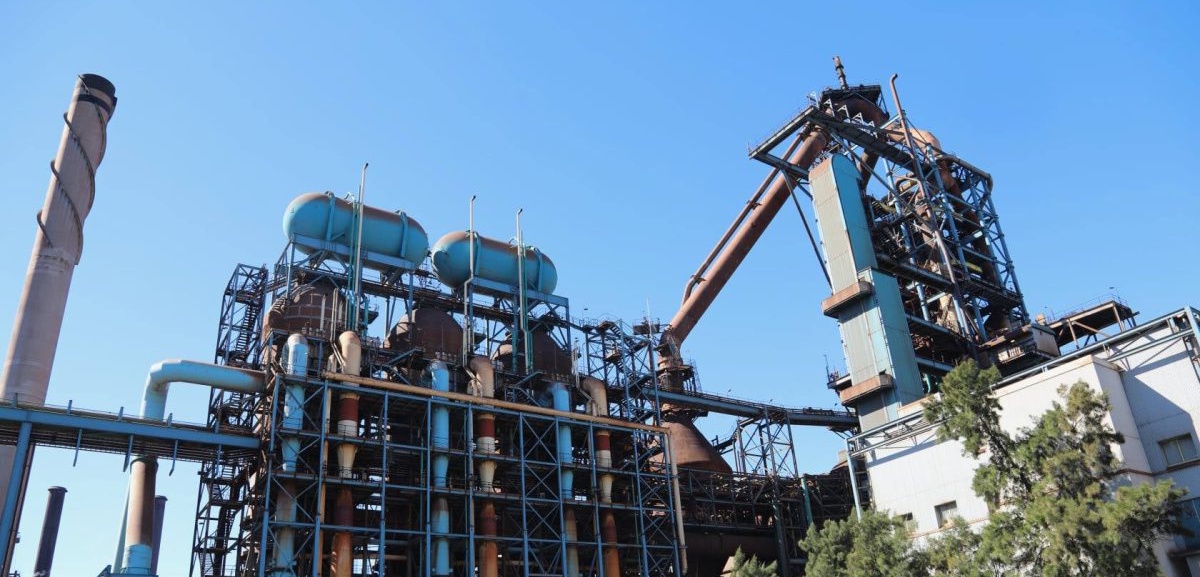
BlueScope Steel No.6 Blast Furnace Reline Project

Streamlining Electrical Design with Elecdes Design Suite (EDS)
Introduction:
BlueScope Steel undertook a significant electrical design project as part of the No. 6 Blast Furnace Reline. Faced with the challenges of digitizing legacy data and ensuring compliance with current standards, BlueScope Steel leveraged the Elecdes Design Suite (EDS) to streamline their workflows, improve accuracy, and accelerate project delivery. This case study examines how BlueScope Steel utilized various modules within the EDS suite to overcome these challenges and achieve substantial efficiency gains.
Summary:
The BlueScope Steel No. 6 Blast Furnace Reline project utilized the Elecdes Design Suite (EDS) to address various electrical design challenges, focusing on efficiency and compliance. The project involved digitizing legacy data, generating terminal strip drawings, updating loop drawings, and modelling plant raceways.
- Elecdes/Instrument Manager: Enabled the rapid generation of over 900 junction box termination sheets ("Z" sheets) by digitizing rasterized text tables using optical character recognition (OCR) software and loading them into the Instrument Manager database. This process significantly reduced manual drafting time. The database- connected drawings allowed for easy integration of subsequent wiring changes. Additionally, the software generated over 4,200 cable and termination schedules (“V” and “Y” sheets) in a compliant Excel format, replacing older systems.
- Instrument Manager: Facilitated the regeneration of instrument loop drawings, bringing them into compliance with current standards and incorporating detailed data from the Instrument Manager database. The project anticipated generating over 5,000 loop drawings using this system.
- Protogen: Was utilized to generate 6BFR drawing borders with populated titles for approximately 900 “Z” sheets, as well as producing around 600 MCC starter schematics from a base set of 30 templates.
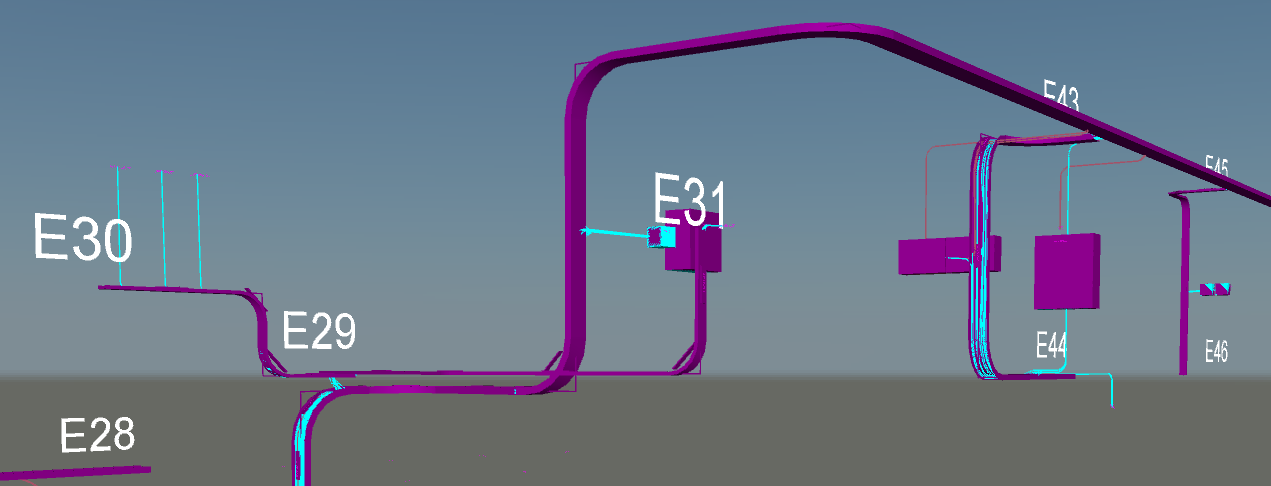
- Paneldes: Was used to model existing plant raceways, enabling better planning and execution of new designs. The tray models were color-coded in Navisworks to differentiate between existing, replaced, and new trays. The node system facilitated construction planning, cross-discipline collaboration, and scaffold planning.
Use of the Elecdes and Instrument Manager software modules
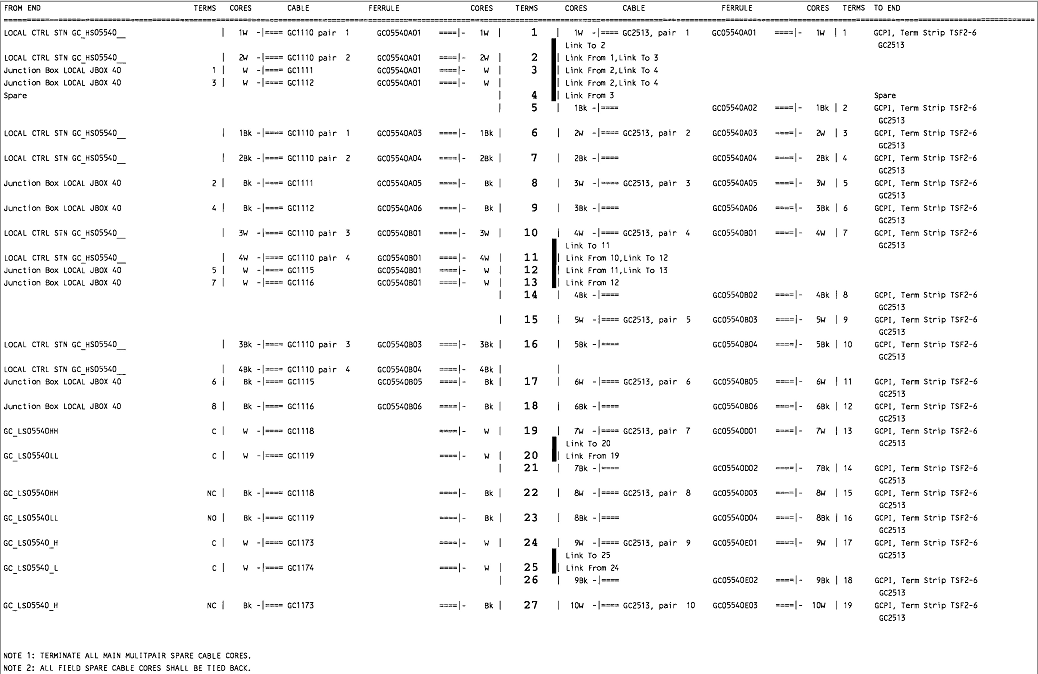
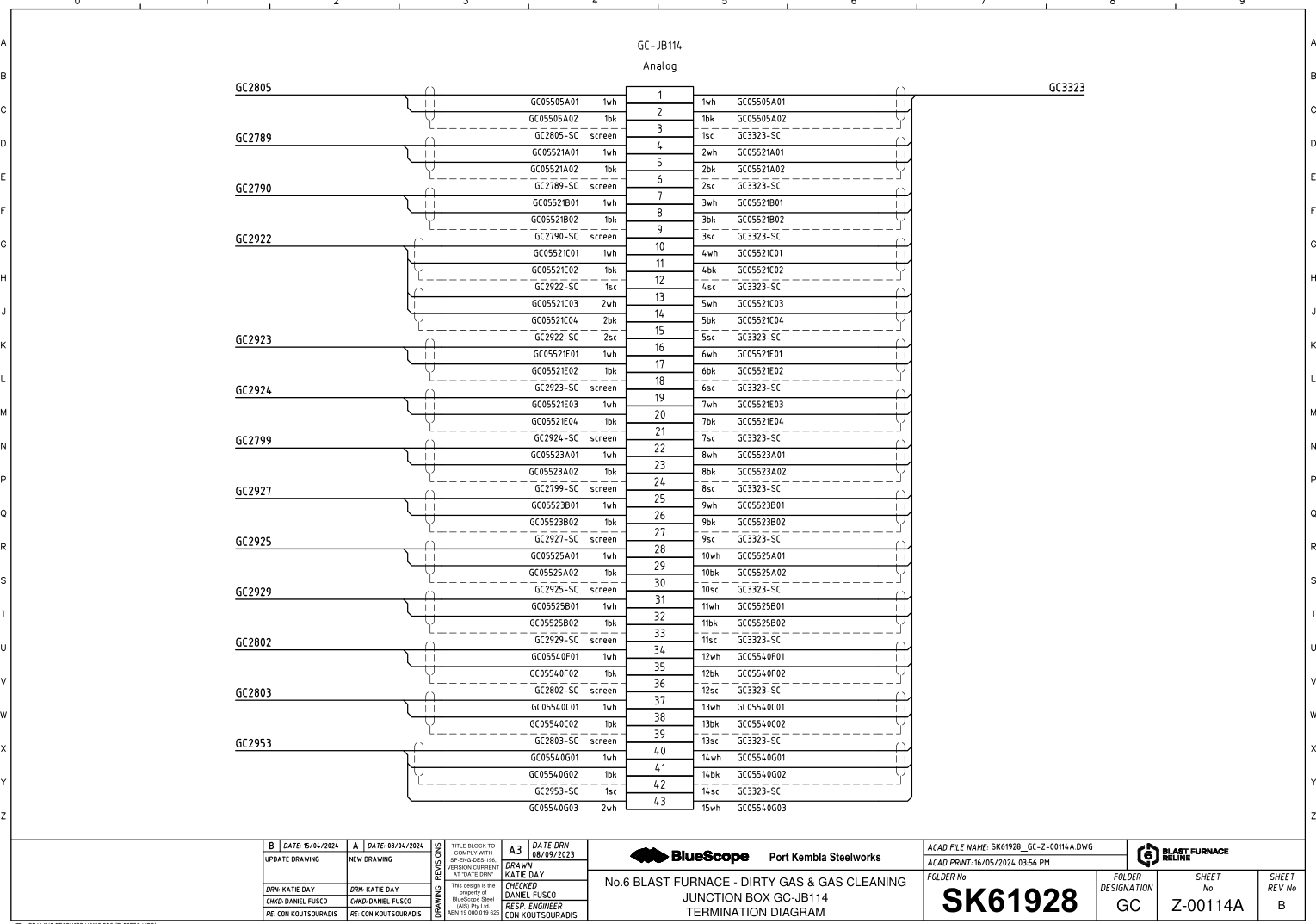
Elecdes wiring diagram generation was used to generate terminal strip drawings. Originally registered as rasterised text tables, this termination data was digitized using optical character recognition software and then loaded into the Instrument Manager database. The open architecture of the IM database gives a lot of flexibility to data engineers to manipulate information from many sources for downstream use. Once digitized, the information has been populated into terminal strip diagrams that meet Bluescope CAD standards. In the first pass at this, we produced over 900 junction box termination sheets ("Z" sheets) inside two weeks. The manual drafting time would ordinarily be 30-60 minutes per sheet, potentially months of work. These drawings remain database connected, therefore can pull in subsequent wiring changes with a “regenerate” action.
“Z” sheets before:
“Z” sheets after:
Cable & Termination schedules (“V” and “Y” sheets)
Provided in a similar state to the “Z” sheets, these numbered over 4,200 on the first campaign. They are now generated entirely out of Instrument Manager, into a compliant Excel format.
Loop Drawings (“F” sheets)
We are currently producing instrument loop drawings and expect to generate over 5,000 drawings from this system.
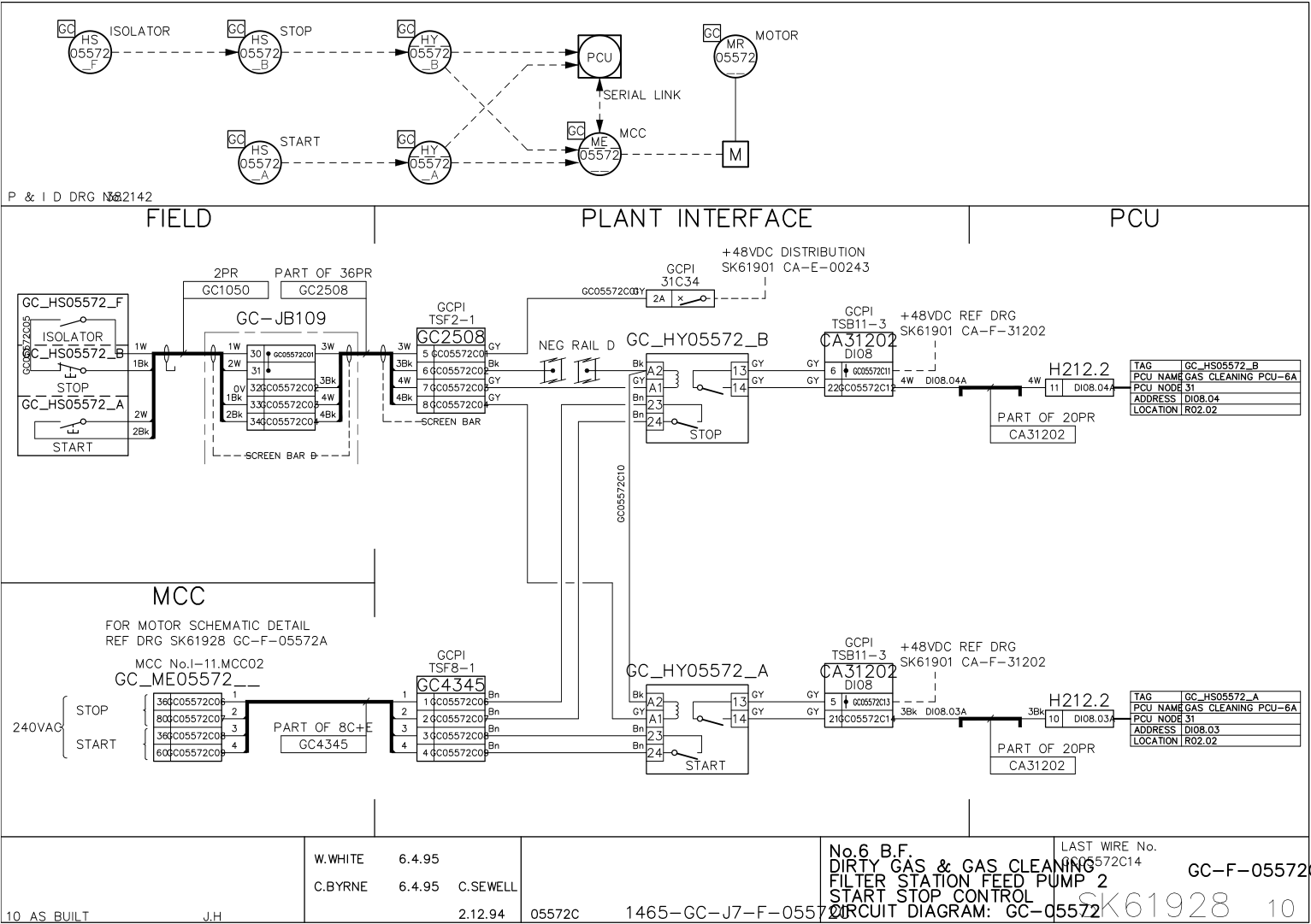
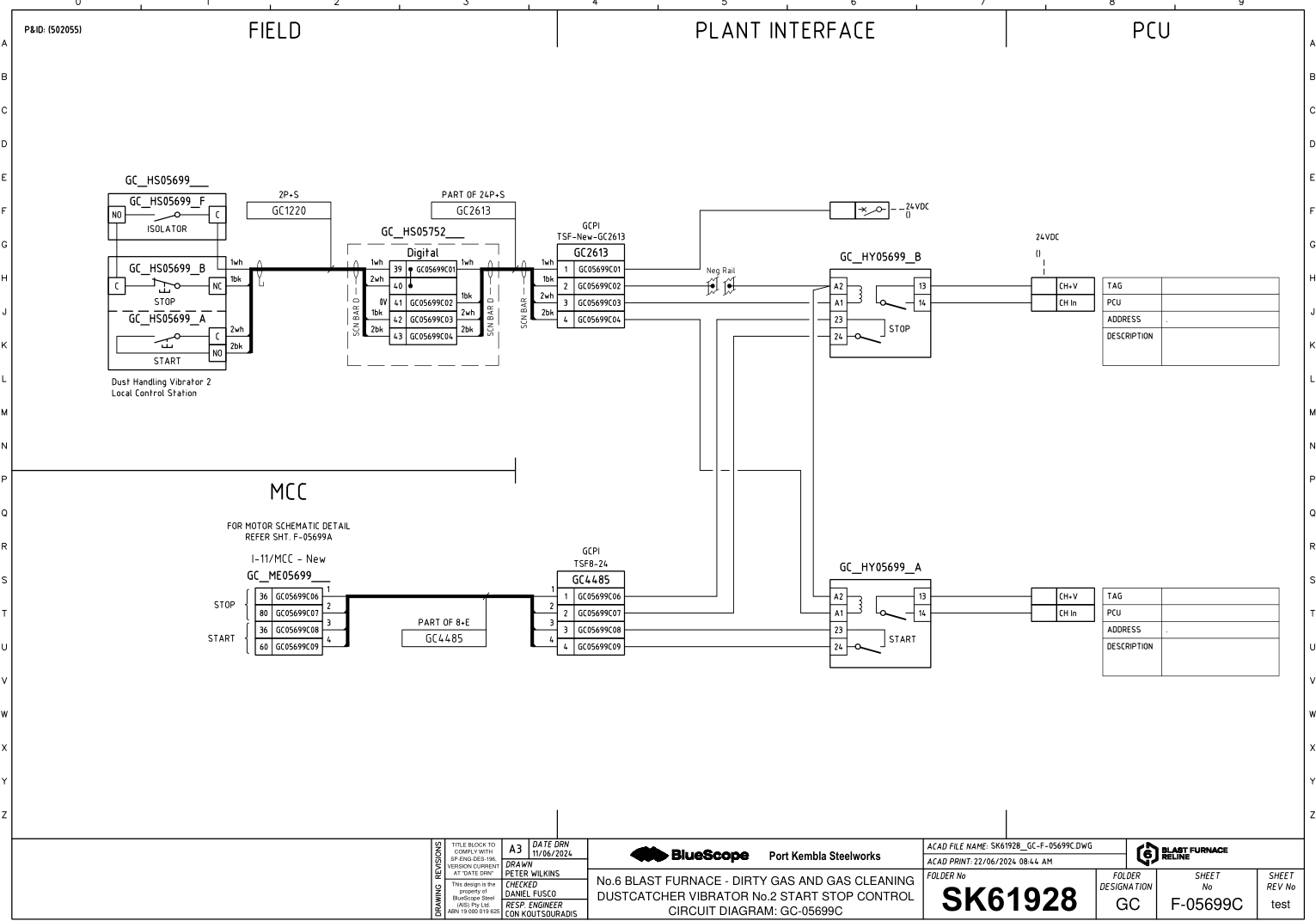
The blast furnace first campaign loop drawings existed in CAD format, but in a degraded state with non-compliant fonts and incomplete title blocks.
In design terms, the primary change to loop drawings will be the revised Plant Interface configuration. However there are also changes to many field junction box layouts, and to some instruments.
Regeneration of loop drawings from end to end not only captures the design update but brings the entire set into compliance, while allowing us to include more detailed data (such as device & I/O descriptions) that come from the IM database as a single source of truth.
First campaign drawing:
Second campaign drawing, produced from IM:
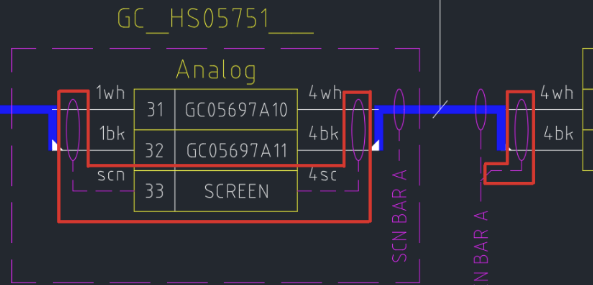
Dynamic functions of loop templates have been used for several purposes including brownfield integration. In the example below, the template detects that a ‘new spec’ IOS multicore is being installed, and reconfigures the field junction box accordingly.
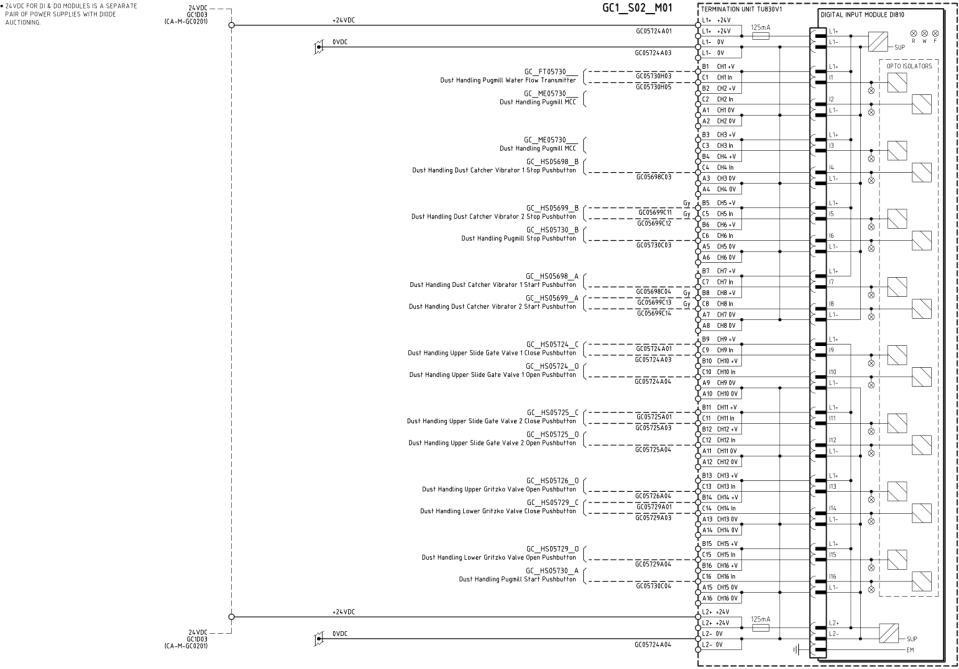
PCU Card Drawings (“M” sheets)
Card drawings are also being set up as ‘loop’ templates. Of all our drawings, these have the lowest interaction requirements to produce. They will replace up to 2,000 sheets in our control system folders.
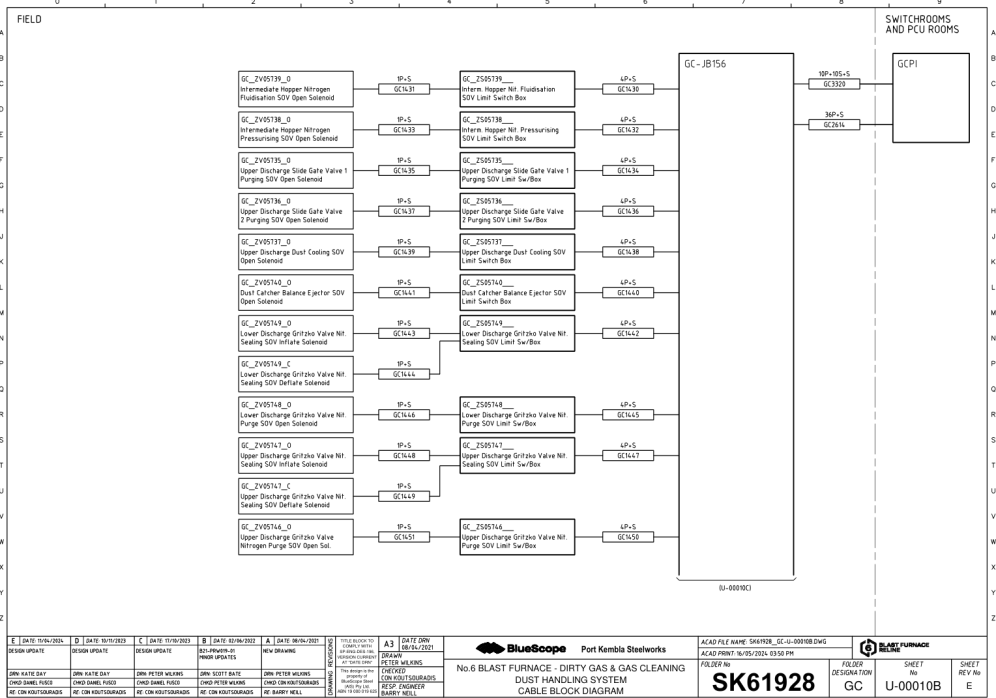
Cable Block Diagrams (“U” sheets)
We have also leveraged the loop template system to accelerate production of cable block diagrams, extracting information from database fields to avoid repeated data entry.
Use of the Protogen Software Module
Although the core of our templating work is in Instrument Manager, Protogen has seen several uses on the project too.
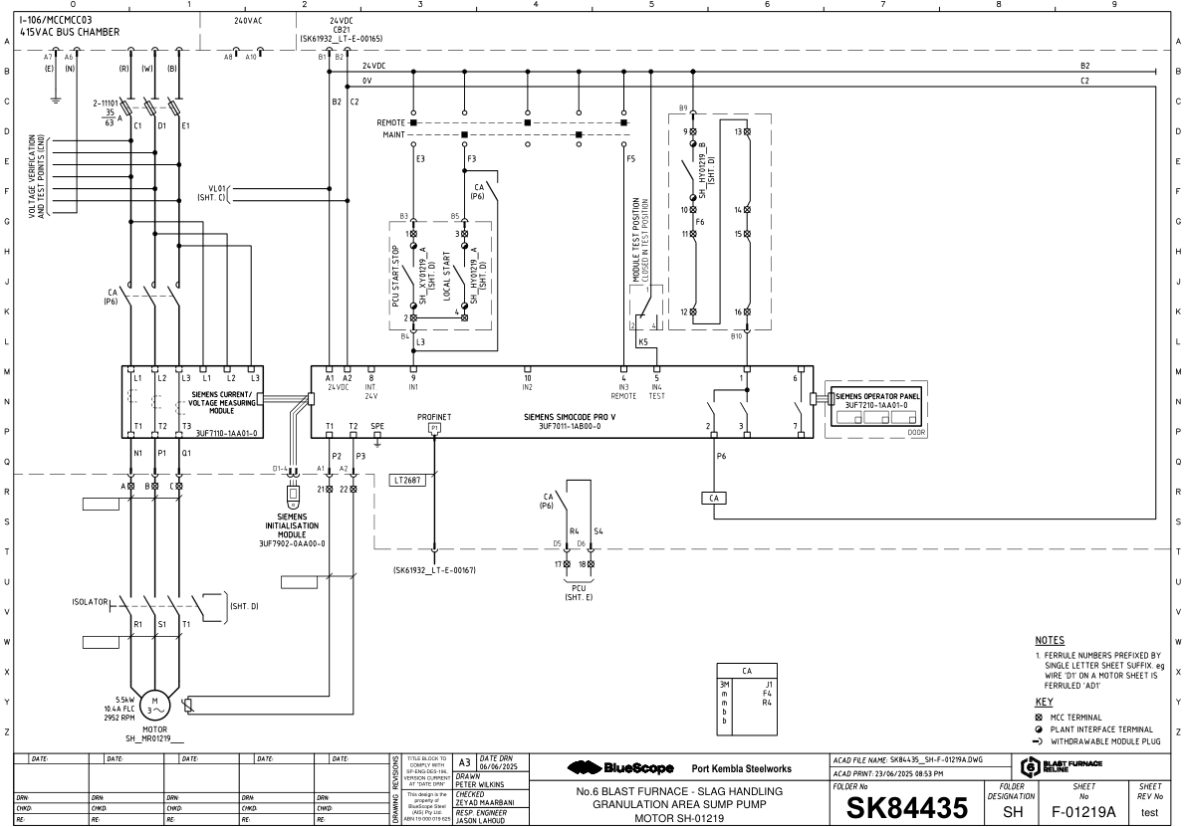
Example MCC starter:
The aforementioned ~900 “Z” sheets built by the wiring diagram generator, first needed a new set of 6BFR drawing borders with populated titles. Protogen was able to roll these out rapidly from the existing Excel-format drawing registers.
Protogen was also used to produce MCC starter schematics, an area of design not managed in Instrument Manager. From a base set of 30 templates we have produced around 600 drawings.
Use of the Paneldes Software Module
Paneldes was used to model existing plant raceways before commencing new design.
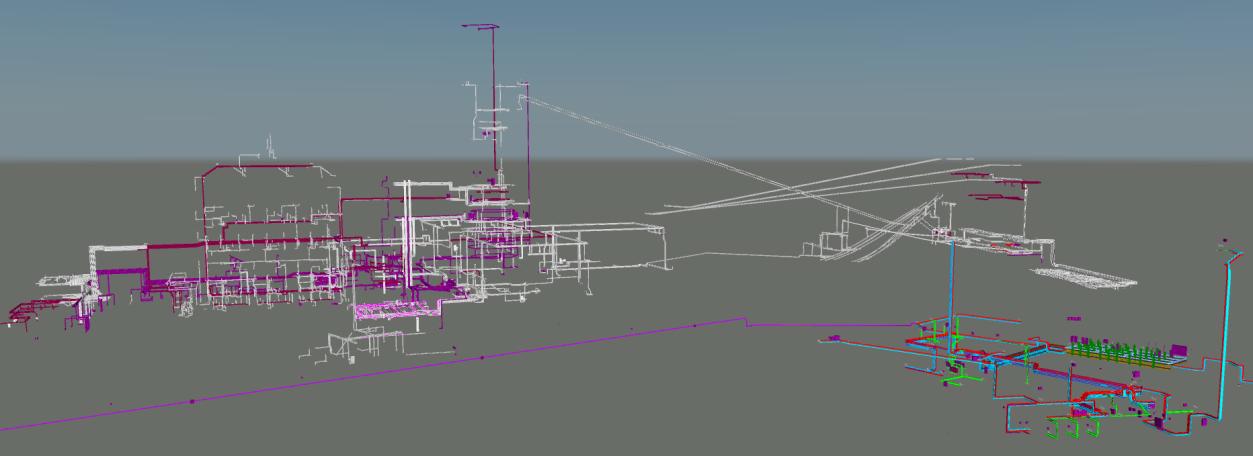
Trays were colour coded in Navisworks to indicate scope. Grey for existing tray, burgundy for like-for-like replacement, and purple for new design.
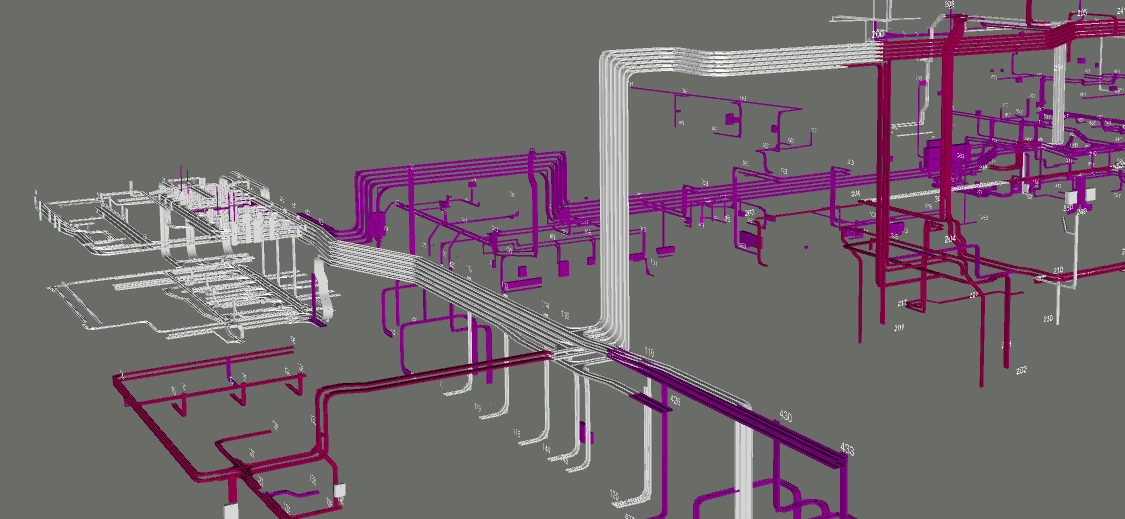
Node numbers were assigned to each tray junction and endpoint. These form the basis for tray tagnames, and act as a waypoint system for cable installation.
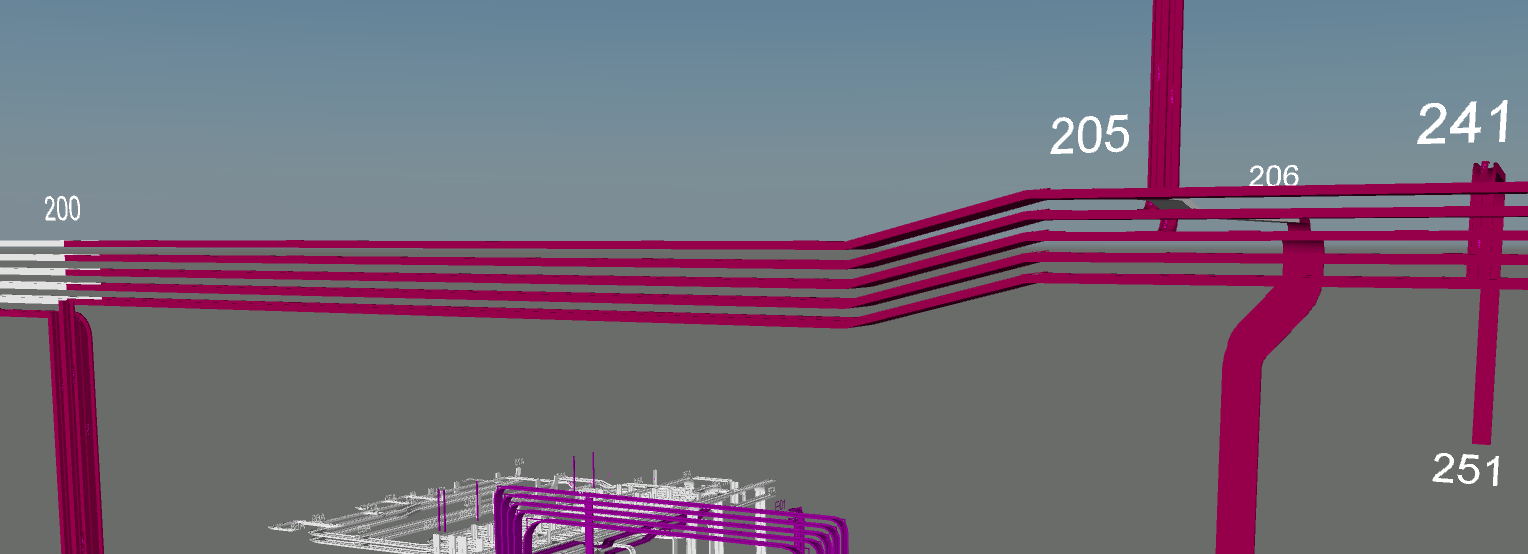
The tray model became an important tool for construction planning and cross discipline collaboration. Notably the node system was also utilised by scaffold planners.
For new design areas, instruments and enclosures were also modelled, enabling the routing of around 2,000 new cables.
Other tools used with EDS; Optical Character Recognition
A significant amount of electrical drawings / documentation from the blast furnace first campaign was kept in rasterised image format. Much of the image data was digitized using optical character recognition software and then loaded into the Instrument Manager database. The open architecture of the IM database gives a lot of flexibility to data engineers to manipulate information from many sources for downstream use.
Other tools used with EDS; Feasibility Estimating Interface
Following the optical character recognition phase, we were able to use the base component tags as the basis of much of the project estimate. Having a starting point in digital form allowed quantity surveying to be done in a data-centric way with additional fields added to the IM database to capture estimate quantities. This was then exported in a format that could be fed into the estimating software (Candy) used for the project.
Other tools used with EDS; Electrical Construction Tracking System
dditional construction tracking tables have been added to the SQL server where the IM database is running to facilitate work packaging and job tracking for the construction contractors. The IM tags were read from the IM database into a custom job tracking system. The IM tags are grouped and arranged into job lists that are aligned with the project schedule. The job tracking lists are issued with the technical specifications for tender and execution of the work. The job lists are formatted in a way that progress can be filled out in the field and data can be updated back into the job tracking system.
Conclusions:
The BlueScope Steel No. 6 Blast Furnace Reline project demonstrates the significant benefits of using the Elecdes Design Suite for large-scale electrical design projects:
- Increased Efficiency: The use of Elecdes and Instrument Manager significantly reduced the time required to generate termination sheets and cable schedules.
- Improved Data Management: Digitizing legacy data and centralizing it within the Instrument Manager database improved data accuracy and accessibility.
- Enhanced Compliance: Regenerating loop drawings and implementing standardized templates ensured adherence to current standards and improved the overall quality of the design documentation.
- Better Collaboration: The use of Paneldes for plant modelling and the implementation of a node system for cable trays facilitated better communication and collaboration between different teams.
- Streamlined Construction: The Electrical Construction Tracking System improved work packaging and job tracking, leading to more efficient construction processes.
By leveraging the Elecdes Design Suite, BlueScope Steel successfully streamlined their electrical design workflows, improved data management, and enhanced collaboration, resulting in significant time and cost savings for the No. 6 Blast Furnace Reline project. This case study highlights the value of EDS as a comprehensive solution for managing complex electrical design projects.